Intel Shifts "Nova Lake-S" Processor Production In-House as 18A Node Yields Improve
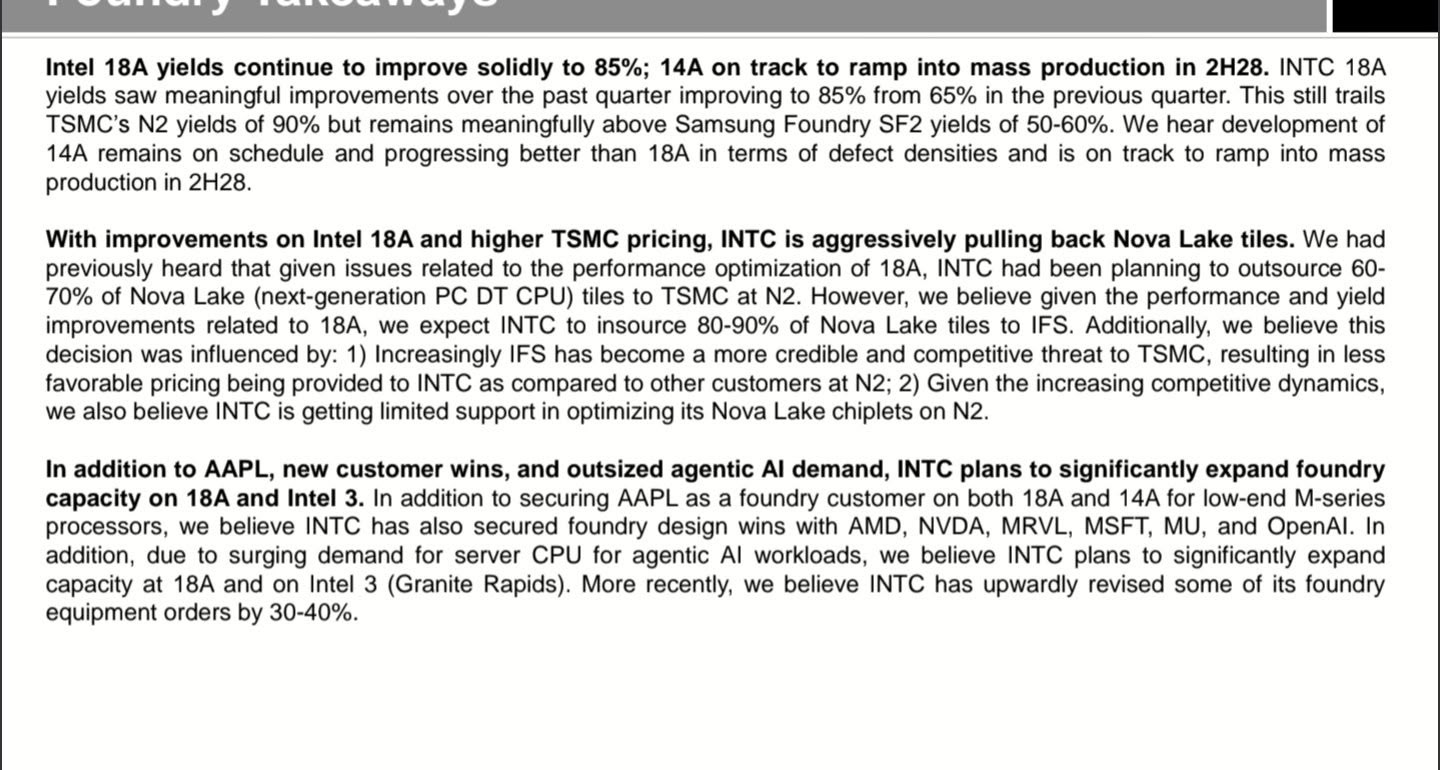
Intel is preparing for the launch of its next-generation "Nova Lake-S" processors, and recent developments indicate a significant change in the company's manufacturing strategy. According to a research note from KeyBanc Capital Markets, Intel had originally planned to outsource the majority of its compute tile production for "Nova Lake" to TSMC, leveraging TSMC's advanced 2 nm N2 process node. Under this initial plan, TSMC would have produced approximately 60-70% of the compute tiles, with the remaining portion manufactured internally by Intel Foundry using the 18A node.
However, updated supply chain insights reveal that Intel is now moving to bring most of the "Nova Lake" compute tile production in-house. The revised strategy will see Intel Foundry handling about 80-90% of the manufacturing, significantly reducing reliance on external partners for this critical component.
Improved 18A Node Yields Drive Manufacturing Confidence
This strategic shift is largely attributed to substantial improvements in the yield rates of Intel's 18A process node. Over recent months, Intel has successfully addressed previous yield challenges, achieving levels that are now considered reliable for high-volume production. The company reports satisfaction with both the yield rate and the minimized number of defective dies, ensuring that production delays are unlikely.
For the mature 18A node, defect rates have dropped to around D0=0.1 or D0=0.2, which is a strong indicator of manufacturing stability. These advancements are the result of ongoing process improvements and extensive high-volume production experience, particularly with the "Panther Lake" processors.
Current and Future Manufacturing Capacity
Intel's current 18A node manufacturing capacity stands at approximately 30,000 wafers per month, distributed between two major facilities: Fab 52 in Phoenix, Arizona, and a site in Hillsboro, Oregon. This capacity is presently sufficient to meet the demands of internal products like "Panther Lake." However, with "Nova Lake" processors approaching their consumer launch, Intel will need to expand its production capabilities to accommodate additional internal product lines.
The decision to shift the majority of "Nova Lake" compute tile production in-house underscores Intel's confidence in its manufacturing processes and its commitment to maintaining control over critical aspects of processor development. As the company continues to refine its 18A node and scale up capacity, the industry will be watching closely to see how these advancements impact the rollout of Intel's next-generation processors.